
CCTV REFERENCE
Digital IP Security Cameras
Digital IP cameras capture and transmit video as digital data over an IP network. Unlike traditional analog cameras, each IP camera functions as a network device, allowing surveillance systems to take advantage of network connectivity, high-resolution video, advanced analytics and flexible recording options.
HOW IT WORKS
Network-Based Video Surveillance
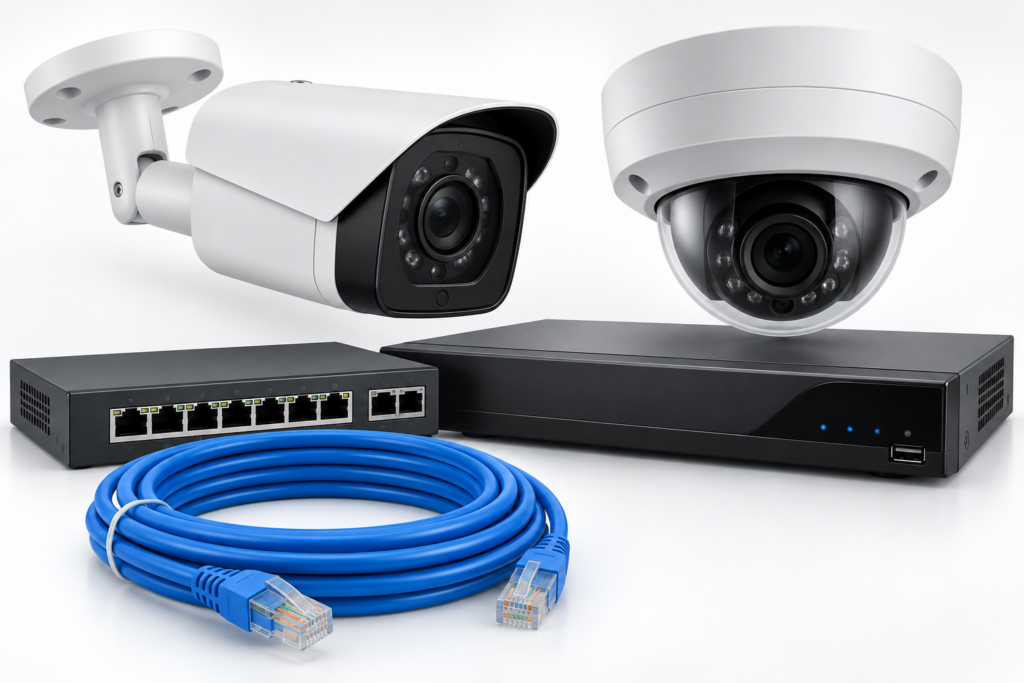
An IP camera captures and processes video digitally before transmitting it across a network. Wired IP cameras commonly connect using Ethernet cabling such as Cat6, while some camera models can communicate over Wi-Fi or other wireless connections.
Many wired IP cameras support Power over Ethernet (PoE), allowing both network data and electrical power to travel over a single Ethernet cable. Video can then be recorded to a Network Video Recorder (NVR), stored locally on supported cameras or managed through other compatible recording platforms.
Digital Video
Video is captured, processed and transmitted digitally across the network.
Ethernet & PoE
A single Ethernet cable can provide both network connectivity and power to compatible PoE cameras.
NVR Recording
An NVR can centrally record, store and manage video from multiple network cameras.
IP CCTV
Flexible, Scalable Surveillance
IP camera systems are well suited to applications requiring high-resolution video, flexible network connectivity and room for future expansion. Because cameras operate as network devices, IP surveillance systems can support capabilities that go beyond basic video recording.
High-Resolution Video
IP cameras are available in a wide range of resolutions, providing detailed video for monitoring and recorded evidence.
Advanced Video Features
Depending on the equipment selected, IP systems can support features such as motion detection, line-crossing alerts and intelligent video analytics.
Flexible Installation
PoE can simplify installation by carrying power and network data over a single Ethernet cable.
Scalable Systems
Additional cameras can be incorporated into a properly designed network as surveillance requirements grow.
Things to Consider
IP surveillance systems depend on properly designed network infrastructure, available bandwidth, storage capacity and appropriate cybersecurity practices. For some existing installations, an HD analog solution may also provide a practical and cost-effective alternative.
Looking for a Complete CCTV Solution?
Digital IP cameras are one component of a complete network video surveillance system. Bulldog can design and install CCTV solutions based on your property’s coverage, network, recording and remote-viewing requirements.