
CCTV REFERENCE
NVR (Network Video Recorder)
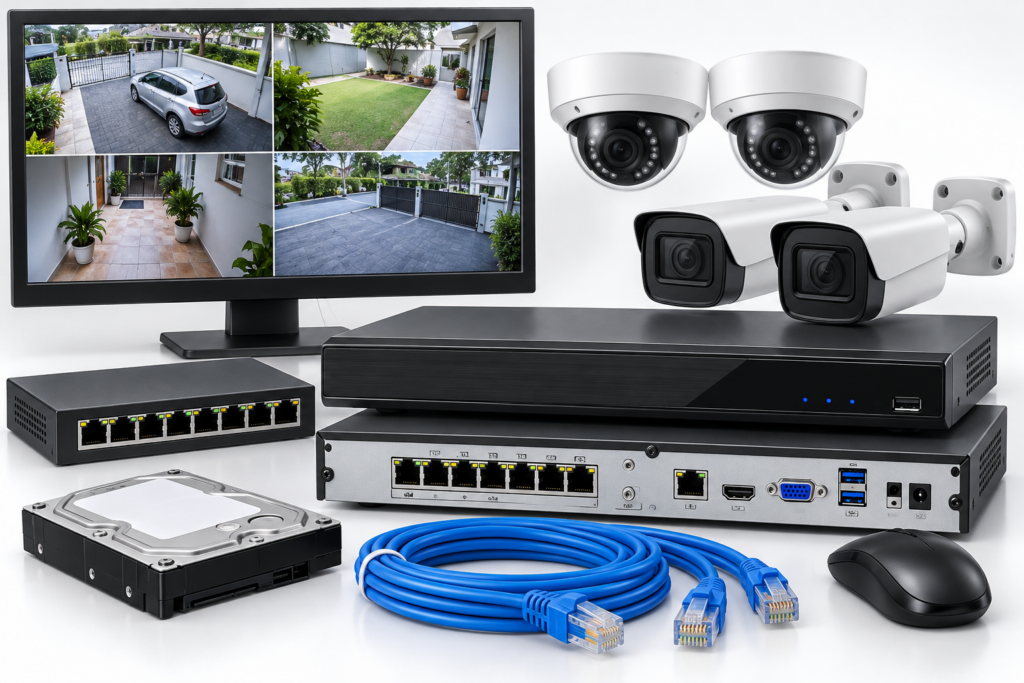
A Network Video Recorder (NVR) is the central recording and management device used in an IP-based CCTV system. It receives digital video streams from network cameras and records the footage to one or more internal hard drives for storage, playback and review.
Unlike traditional analog CCTV systems, IP cameras process and encode video before transmitting it across the network. The NVR brings these camera streams together into a centralized surveillance system for recording, management and remote access.
HOW IT WORKS
From IP Camera to Recorded Footage
IP cameras capture and process video digitally before transmitting it across an Ethernet network to the NVR. Depending on the system design, cameras may connect directly to PoE ports built into the NVR or through separate PoE network switches.
Power over Ethernet (PoE) allows compatible IP cameras to receive both power and network connectivity through a single Cat5e or Cat6 Ethernet cable, simplifying installation.
The NVR records the incoming digital video streams to its internal storage and provides centralized access for live viewing, recorded playback, system configuration and remote monitoring.
KEY FUNCTIONS
What Does an NVR Do?
Video Recording & Storage
Receives and records digital video streams from connected IP cameras to internal hard drives for later review and playback.
Live & Remote Viewing
Allows authorized users to monitor live cameras and review recorded footage locally or remotely through compatible applications and devices.
Centralized Camera Management
Provides a central interface for managing compatible IP cameras, recording schedules, user access and surveillance settings.
Events & Video Analytics
Can support features such as motion events, smart search and advanced video analytics, depending on the capabilities of the cameras and NVR.
NVR VS DVR
What's the Difference?
Both NVRs and DVRs provide centralized recording and management for CCTV systems, but they are designed around different camera technologies.
An NVR is primarily used with digital IP cameras. The cameras process and encode their video before transmitting it across the network to the recorder.
A DVR is primarily used with analog cameras. The camera’s video signal is transmitted to the DVR, where the video is processed and recorded.
Both technologies can provide high-quality surveillance, recording and remote viewing. The appropriate choice depends on the cameras being used, existing cabling and network infrastructure, surveillance requirements and available budget.
Looking for a Complete CCTV Solution?
An NVR is only one component of a complete IP surveillance system. Bulldog can design and install CCTV solutions based on your property’s coverage, recording, storage, networking and remote-viewing requirements.