
CCTV REFERENCE
DVR (Digital Video Recorder)
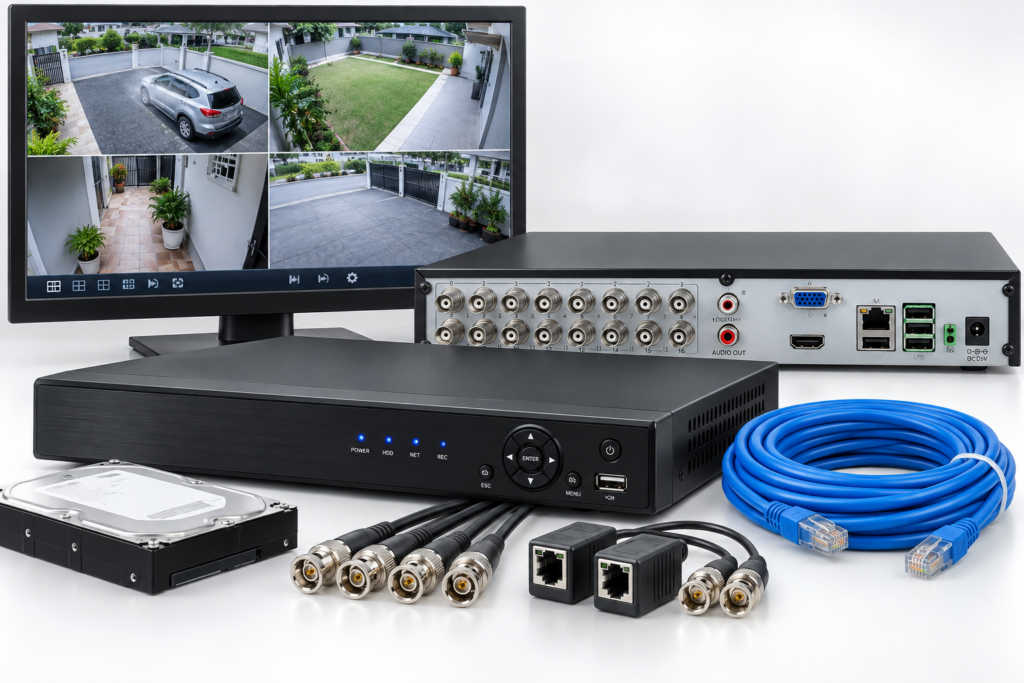
A Digital Video Recorder (DVR) is the central recording and management device used in an analog CCTV system. It receives video signals from connected analog cameras, processes and compresses the footage, and stores recordings on one or more internal hard drives for live viewing and playback.
Modern DVRs support high-definition analog camera technologies and provide many of the capabilities associated with modern surveillance systems, including remote viewing, event-based recording, video search and network connectivity.
HOW IT WORKS
From Camera to Recorded Footage
Analog cameras transmit their video signals to the DVR using coaxial cable or Cat6 100% copper cabling with suitable active or passive video baluns. The DVR receives these signals, processes and compresses the video digitally, and records the footage to its internal storage.
The DVR can also be connected to the local network and internet, allowing authorized users to access live cameras, review recorded footage and manage the surveillance system remotely using compatible computers, smartphones or tablets.
KEY FUNCTIONS
What Does a DVR Do?
Video Recording & Storage
Processes and records video from connected analog cameras to internal hard drives for later review and playback.
Remote Viewing
Network connectivity can provide secure remote access to live and recorded video through compatible applications and devices.
Live View & Playback
Allows users to monitor cameras in real time and quickly search recorded footage by date, time or event.
Recording & Event Management
Supports features such as continuous recording, scheduled recording, motion-triggered recording and configurable event notifications.
DVR VS NVR
What's the Difference?
A DVR is primarily designed to work with analog security cameras, while a Network Video Recorder (NVR) is generally used with digital IP cameras.
With a DVR system, video from the cameras is transmitted to the recorder, where it is processed and stored. In an IP camera system, much of the video processing takes place within the cameras themselves before the video is transmitted across the network to the NVR.
Both technologies can provide high-quality surveillance, remote viewing and reliable recording. The appropriate system depends on the cameras being used, existing infrastructure, surveillance requirements and available budget.
Looking for a Complete CCTV Solution?
A DVR is only one component of a complete surveillance system. Bulldog can design and install CCTV solutions based on your property’s coverage, recording, storage and remote-viewing requirements.